
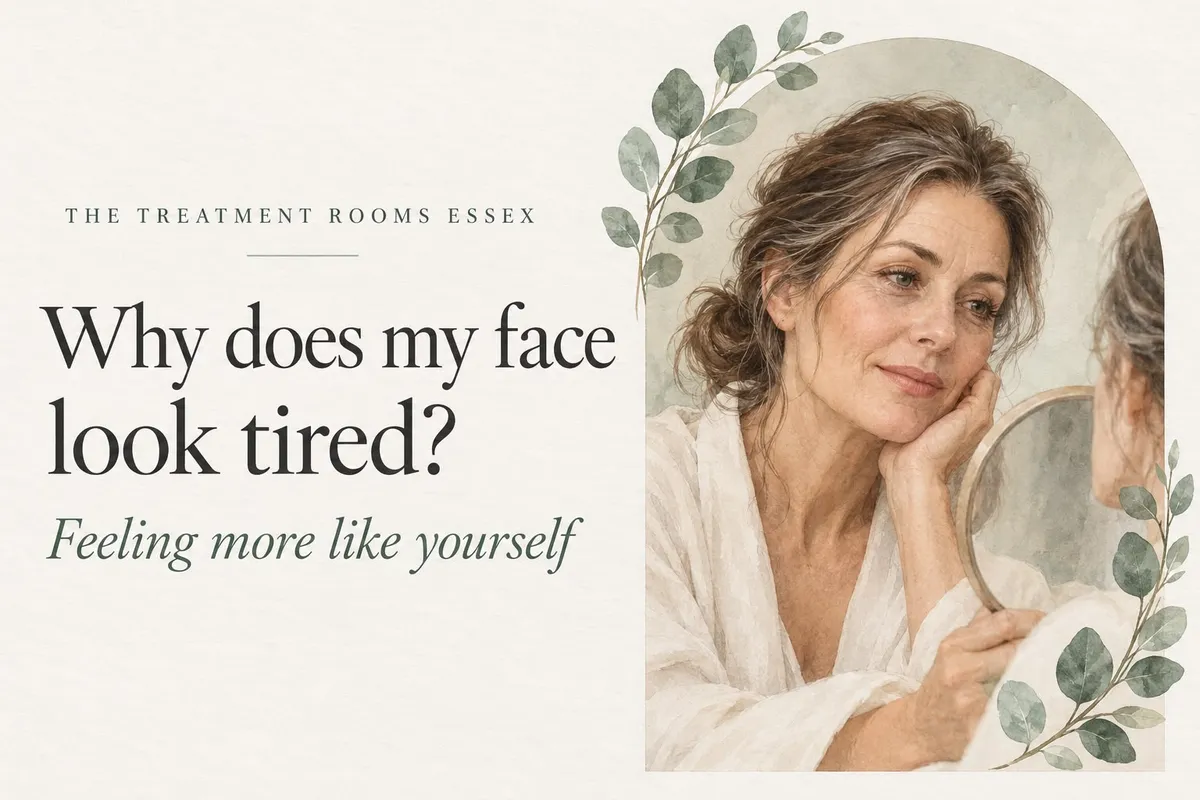
Why does my face look tired even when I feel fine
You have had a reasonable night's sleep, you feel perfectly capable of getting through the day, and then someone asks whether you are tired. Lovely. Your face appears to have submitted a different report. Perhaps your skin looks dull, makeup sits differently or the lines around your eyes seem more noticeable.
You might search “why does my face look tired” when what you really want is to recognise yourself again. That does not mean you want a different face. You may simply want your skin to look a little fresher and your morning routine to feel less like hard work.
Start by describing what tired means to you
Tired-looking skin is a description, rather than a diagnosis. One person means dry patches and uneven makeup. Another means shadows around the eyes. Someone else is noticing a change in texture or firmness. I want to understand your version before talking about a treatment.
Try finishing this sentence: “The bit that bothers me most is…” It may sound simple, but it helps us focus. Otherwise, a consultation can become a tour of every possible concern, including ones you had never noticed until somebody pointed them out. That is not how I want you to feel here.
Where perimenopause may fit
Menopause can bring changes in skin hydration, thickness and firmness. Perimenopause can also involve sleep problems and other symptoms that affect how you feel day to day. These changes vary between people, and facial appearance alone cannot establish whether hormones are involved. [1, 2]
If you are experiencing wider symptoms, it is worth speaking with your GP. A skincare consultation can sit alongside that conversation. I can support your cosmetic skin goals without pretending a facial will address the whole experience of perimenopause. You deserve clear boundaries around what each service offers.
Freshness begins with a useful priority
If you say, “I do not know what my options are,” I will not assume you want the most intensive treatment. I would ask what improvement matters, what downtime you could manage and how much you want to spend. The right starting point needs to make sense in your actual week.
Perhaps you have a family event coming up. Perhaps this is something you have been thinking about for months. Tell me the timing, but let us keep expectations realistic. A treatment should not be squeezed into an unsuitable window because there is a photograph on the calendar.
Review the things you do every day
Moisturiser can soften the appearance of some fine lines by helping skin retain water. Sun protection is another foundation of skin care, rather than an occasional extra for holidays. Dermatologists recommend broad-spectrum sunscreen with SPF 30 or higher, alongside other protection from the sun. [16, 17]
During a homecare review, I want to know what you already use and what you can comfortably maintain. If the morning routine needs to be quick, we work with that. If you enjoy skincare but have become overwhelmed by competing advice, I can help explain the role of each proposed step.
You do not need to replace everything just because your age has changed. Equally, a product that once suited you might now need reviewing. Your skin should guide the conversation. The date on your birthday cake is not a skincare prescription, even if the candles are becoming a logistical issue.
Treatments should follow the concern
At The Treatment Rooms in Braintree, the skin services include bespoke facials, microneedling, radio frequency and LED. These are different services with different suitability considerations. Listing them together does not mean you need them all, or that any one treatment can address every reason a face looks tired.
A consultation gives us time to discuss your goals before choosing an approach. I will explain what a proposed treatment involves, what results are realistic and what preparation or aftercare is required. I also want to know about medicines, previous reactions and any treatment you have had elsewhere.
If your main priority is a comfortable, manageable routine, that matters just as much as interest in an in-clinic treatment. A skincare plan should not feel like a test of how much you are willing to buy. Ask why I am suggesting something. I want you to understand the answer.
What an ongoing plan can offer
For some clients, the useful part of a programme is having a clear order and a chance to review progress. That may appeal if you are thinking, “I have tried lots of things, but I never know what to do next.” We can discuss whether Second Spring or another approach suits your priorities.
Before committing, ask about the visits, homecare, total cost and what happens if your circumstances change. You should have enough information to decide comfortably. I would rather agree on a manageable plan than hear that keeping up with it has become another source of stress.
Keep the focus on your own face
Bring examples if they help explain a concern, but let us be careful with filtered photographs or somebody else's results. Your skin, facial structure and medical history are individual. A useful goal might be smoother-feeling skin or a routine that helps makeup sit more comfortably. It does not need to involve copying anyone.
Actual persistent tiredness is a separate issue from looking tired. If you are unusually fatigued, unwell or noticing other unexplained changes, speak with your GP. I would not want an appearance-focused appointment to distract from symptoms that need a medical conversation.
Book a consultation
If your face looks different and you cannot quite explain why, you do not need to choose a treatment before asking for advice. Come with the concern you can describe, even if that is simply, “I would like to feel more like myself.”
Book a consultation at The Treatment Rooms in Braintree. I will listen, explain the options and help you decide on a realistic next step, with your skin and your priorities leading the way.
Sources
Sources for this article. Numbers match the references in the text.
1. NHS. Symptoms of menopause and perimenopause
2. American Academy of Dermatology. Caring for your skin in menopause
16. American Academy of Dermatology. Wrinkle remedies
17. American Academy of Dermatology. Skin care in your 40s and 50s