
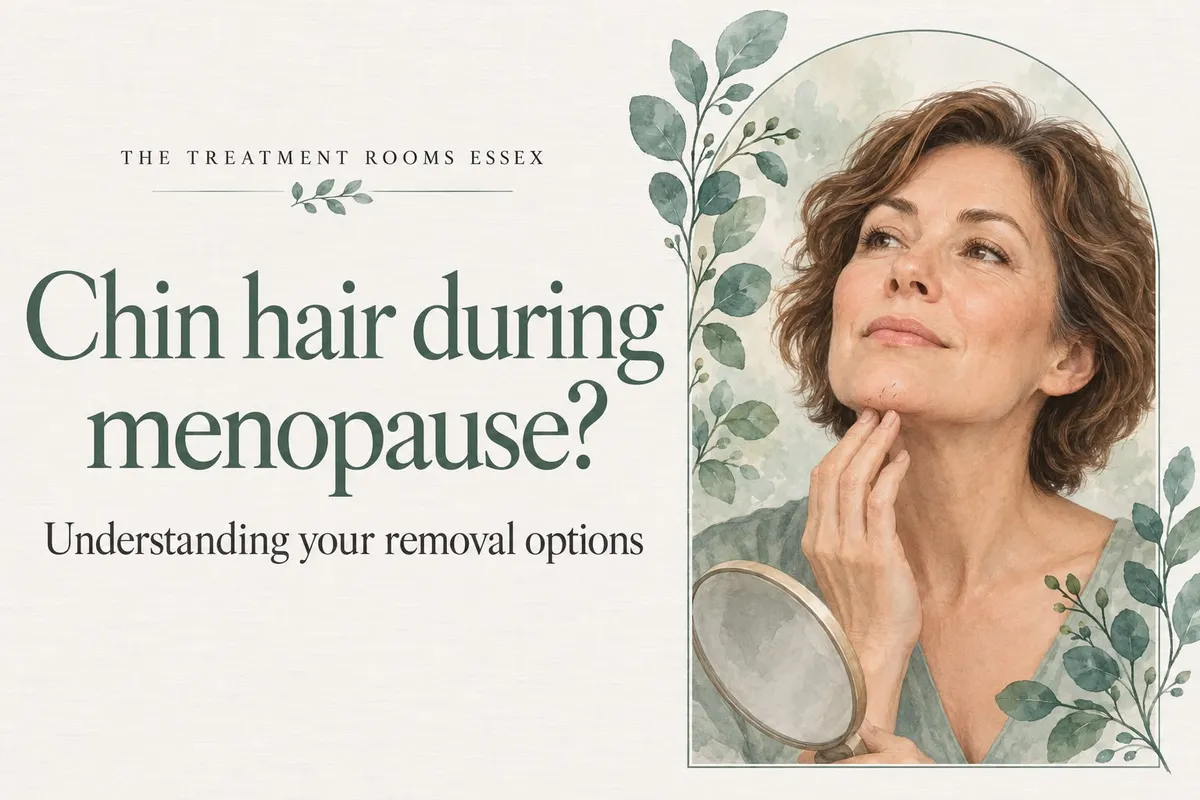
Why am I growing chin hairs during menopause
You catch one in the car mirror. Then another appears under your chin, apparently fully grown and ready to make itself at home. The tweezers move from the bathroom to your handbag, and checking your face becomes one more job you did not ask for.
If you have searched “why am I growing chin hairs” or “permanent chin hair removal”, I want you to know you can talk about it openly here. You do not need to apologise, whisper or pretend you are asking for a friend. I am interested in what bothers you and what you would like to change.
What you actually want help with
For some people, a few hairs are no bother. For others, checking and removing them takes up time and headspace. You might be thinking, “I want to stop worrying that someone can see them.” That is a personal concern worth hearing, without anyone deciding whether it is important enough.
Keeping facial hair is a valid choice too. At The Treatment Rooms, the conversation follows your preference. If you want removal, I will explain the options. If you want information before deciding, that is welcome as well. You do not need to justify what makes you feel comfortable in your own skin.
Can perimenopause change facial hair
More noticeable facial hair can occur around menopause as hormone levels change. But facial hair has other possible explanations, including conditions such as polycystic ovary syndrome and some medicines. A change in growth does not, by itself, tell us the cause. [2, 18]
If growth has increased quickly, or comes with other changes such as a deeper voice, get medical advice promptly. Your GP can assess whether investigation is needed. Hair removal can address unwanted hair, but it does not diagnose or treat an underlying hormonal condition. [18]
Why choosing by hair colour matters
Laser hair removal relies on pigment in the hair. White, grey, red and very light blonde hairs generally do not respond effectively. Electrolysis can treat hair regardless of its colour, which makes it a useful option to discuss when pale chin hairs are the main concern. [19]
That difference can save a great deal of confusion. “I have been told laser is the answer” does not automatically mean it suits the hairs you have. At consultation, I want to see the growth and discuss your skin, history and expectations before recommending a route.
Sometimes there is a mixture of colours and densities. That can change the conversation again. You should understand why a method is being considered for your particular hair, rather than receive a recommendation based only on which treatment happens to be most familiar.
What electrolysis involves
Electrolysis treats individual follicles using a fine probe and electrical energy. It can permanently remove unwanted hair, but it requires a course of appointments rather than one visit. Sensation and skin response vary, and treatment needs to be carried out by an appropriately trained practitioner. [20, 21]
I will talk you through the process before treatment, including preparation and aftercare. Ask about anything you are unsure of, especially if the word probe makes you nervous. Knowing what is going to happen can make an unfamiliar appointment feel easier to approach.
At the consultation, we will also discuss the patch test and your post-procedure kit. I want you to understand how to care for the area and what reactions to watch for. You should leave with clear guidance rather than trying to remember a rushed conversation at the door.
Be realistic about the course
Your starting point, the number of hairs and the time required to treat them all matter when planning appointments. I will explain the likely commitment after assessing you. I cannot responsibly give everyone the same completion date or promise that a particular number of sessions will be enough.
Hormonal changes can also affect future growth. Permanently treating an individual follicle does not mean preventing every other follicle from developing a noticeable hair later. That distinction matters when you are deciding what success looks like and how you want to manage your hair over time. [20]
If your main question is, “Will this fit around work and everything else?” ask it early. We can discuss appointment planning and what is practical. You deserve a realistic picture of both the treatment and the commitment, including costs, before deciding whether to proceed.
What about the tweezers in the meantime
Tell me how you currently remove the hair, including plucking, waxing, shaving or trimming. Your preparation advice will depend on the treatment being considered. Follow the clinic's instructions about which methods to avoid and how much visible hair is needed for assessment or treatment.
Please do not feel you must arrive with everything removed to be polite. I need to assess the actual concern. Equally, if letting hair grow for an appointment worries you, say so. We can explain the preparation clearly and discuss how to make attending feel manageable.
A private conversation without embarrassment
The Treatment Rooms is a discreet clinic in Braintree, and everybody and every body is welcome. You can tell me if you feel anxious about being seen, touched or asked questions. I will explain the appointment so you know what to expect before deciding on treatment.
Perhaps what you need first is someone to make sense of the options after years of managing the hair alone. That is a useful consultation outcome. I will explain what I can offer and where medical advice may help, without treating your concern as something you should simply put up with.
Book a consultation
If chin hair is taking up more of your day than you would like, let us talk about a longer-term plan. Bring your questions, including the ones that feel awkward. You can ask them here. We can take the conversation at your pace.
Book a consultation at The Treatment Rooms in Braintree. I will assess your hair, explain suitable options and help you decide what feels right for you.
Sources
Sources for this article. Numbers match the references in the text.
2. American Academy of Dermatology. Caring for your skin in menopause
18. NHS. Excessive hair growth
19. American Academy of Dermatology. Six ways to remove unwanted hair
20. DermNet. Electrolysis
21. ASA and CAP. Hair removal advertising advice